Home
Home

26.11.2021
On the other side of history: How LGBT movements in Moldova, Ukraine and Germany were formed
The history of the LGBT movement is specific and interesting but largely forgotten. Even though it has not happened that long ago.
In the 1990s, after the collapse of the USSR, homosexuality was decriminalized. Gradually, discussions on the topics previously considered taboo have been ignited. LGBT representatives became visible in pop culture, a context in which their appearance was not considered controversial.
Later, however, the subject of the LGBT community became politicized. Those who previously gathered only in secret, in small local groups, are beginning to lay the groundwork for organizations to defend LGBT people and demand equal rights.
Three activists from Moldova, Ukraine and Germany travel back in time and talk about how the LGBT movement has evolved in their countries, but especially why it is important to keep this history alive, part of which has already been lost forever. Although lesbians, like gays, have been involved in initiating and developing the movement, many of their stories remain unknown. They rarely came out, were involved in other movements, and their organizations were less funded.
Moldova: "People have understood that they can not only be free but also happy"

In the early 1990s, gays would meet secretly in pre-arranged places. The first coming-outs of that time resulted in violence. Subsequently, in 1992-2002, in the Republic of Moldova, more than 15 hate-motivated homicides were documented.
Following the tumultuous period after the collapse of the USSR, LGBT activist Alexei Marchkov and several of his friends thought of creating a community home in Chisinau, which would also aim to inform society about who LGBT people are.
Thus, in 1998, the “GENDERDOC-M” Information Center (GDM) appeared in Chisinau, among the founders being Marchkov's wife, to whom he had previously come out. Here took place the first coagulated events of the community - the first conferences, the first workshops, but also the preparations for the first Pride.
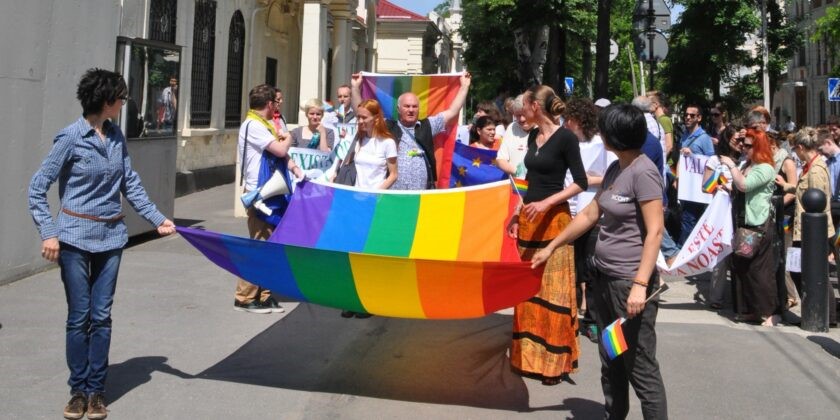
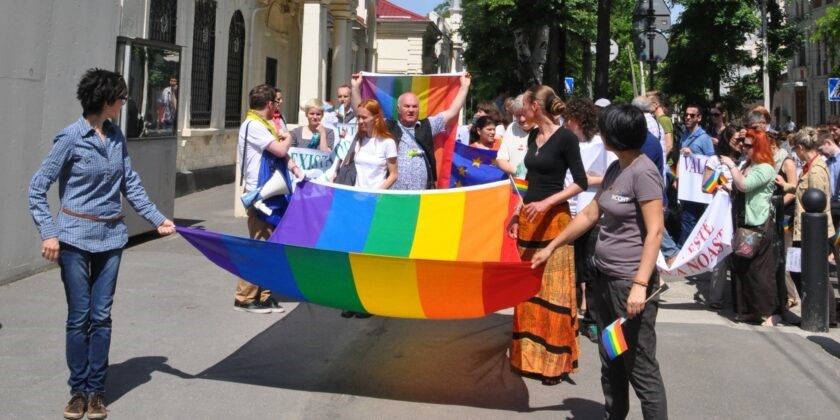
In 2002, GDM had already become a well-known center in the Republic of Moldova, respectively, the Pride March organized then, second only to Belarus in Eastern Europe, was attended by many people. "Maybe more than ever", says Marchkov.
The intention was for LGBT people to become visible, so the event was predominantly cultural. "The society did not yet know who gays, lesbians, bisexuals, transgender people were. We had to show them that we don't have horns, five arms or four legs", Marchkov explains.
After the event, they talked to the attendees. Alexei reveals that LGBT people then had the revelation that they can be "not only happy but also free".
Instead, after the first Pride events, the informative-cultural character of those changed while being politicized, along with the LGBT rights issue in society in general.
"Although some activities related to the demand for equal rights were launched then, we gradually approached this, without burdening the society. We wanted the audience to see our portrait first. Then, we included some political events", adds Alexei.

Among them, there were flower-layings or protests in front of the Chisinau City Hall when it intended to ban the Pride March. Even so, the event took place, even though provocateurs had appeared.
"On the other hand, the legislative basis for which activists have been fighting till now - for example, the Law on Ensuring Equality, for which they continue to fight, influences the protection of LGBT people", Marchkov points out.
Meanwhile, the history of the Moldovan LGBT movement so far is kept in written journals and on video recordings on CDs, at the GDM office. Activists consider it important to keep details about the first rallies, about how they created GDM, about the first Pride Marches. That way, they say, at least the stories and issues the LGBT members that GDM has been in contact with had will be kept. On one hand, this means that other young people will be able to discover that they are not the only ones who go through similar dilemmas when they discover their identity, and, on the other hand, as Alexei Marchkov remarks, that gays and lesbians have always existed.
Ukraine: "Today, they can live relatively openly..."

The first LGBT organizations also appeared in Ukraine in the 1990s, in quite complicated conditions. The first initiatives were built from the ground up and did not have many connections. People would invest their own money without any other financial support. At that time, there were only two LGBT organizations and two magazines documenting the community’s activity. Organizing events beyond small interest groups remained a complicated matter. On the other hand, LGBT people could already be seen on TV.
Later, in 1997, one of the first public figures in Ukraine came out. Artist and performer Konstantin Gnatenko talks about his identity for the first time on the TV show "I'm not a monster". LGBT activists claim that this precedent paved the way for other members of the community, in a sterile space until then.
Gradually, LGBT organizations began to appear in several areas of the country, and in early 2000 they were working on various thematic conferences.
"If since 2004 there would appear about one LGBT organization per year, then after that, that number increased. In parallel with men's organizations, women's organizations also were founded", reveals Maxim Kasyanchuk, an expert on issues related to LGBT, HIV/AIDS, as well as human rights.
The first attempt to organize a Pride March in Kyiv took place in 2012. The attempt was met with violence, with activists severely beaten live on TV. As a result, public opinion has changed: there was no need to prove that homophobia, indeed, exists.

The following year, Pride took place again, and cases of discrimination against LGBT people continued. Maxim lists expelled students from educational institutions following them coming out, attempts to introduce legislation banning "gay propaganda" and a period in 2010 when law enforcement officials built an entire system of blackmailing homosexual people from Donetsk. Although, in the end, this generated criminal cases and an entire police department disbanded, the situation of LGBT people in the region did not improve, especially when the armed conflict in the region followed. During that time, all the efforts of LGBT organizations have been greatly reduced. In these circumstances, the Penal Code was changed, and the article punishing "sodomy" was reintroduced. It was later cancelled, but Kasyanchuk claims that local law enforcement is becoming "obsolete", having not undergone training sessions, as LGBT people are in danger.
Kasyanchuk left the Donetsk region where he lived in 2014 and is now settled in Estonia. Other gay people did so as well "primarily for their safety" - Maxim estimates that it would be 50% of the total number. In this context, other activists refer to a "return to the Soviet-era" for homosexuals.
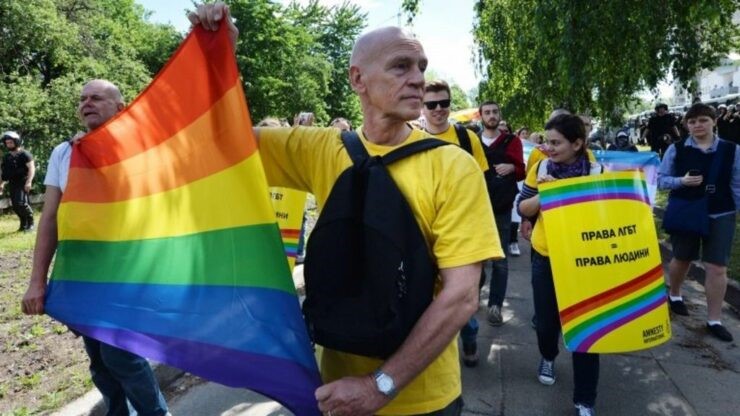
In the rest of Ukraine, the Pride marches took place with an increasing number of people in the following years, culminating in 2019 with an event in Kyiv, attended by over 8 thousand people. At the same time, since 2016, the ban on donating blood, applied to gay men, has been lifted.
Currently, according to Maxim, for homosexuals in Ukraine there is no complete security, but they "can live relatively openly".
Data on the evolution of the LGBT movement in Ukraine are kept in various forms. The history of LGBT is documented through the memoirs of activists, but also through media revelations, which also include the stories of LGBT families.
Germany: "It is vital to document our history"
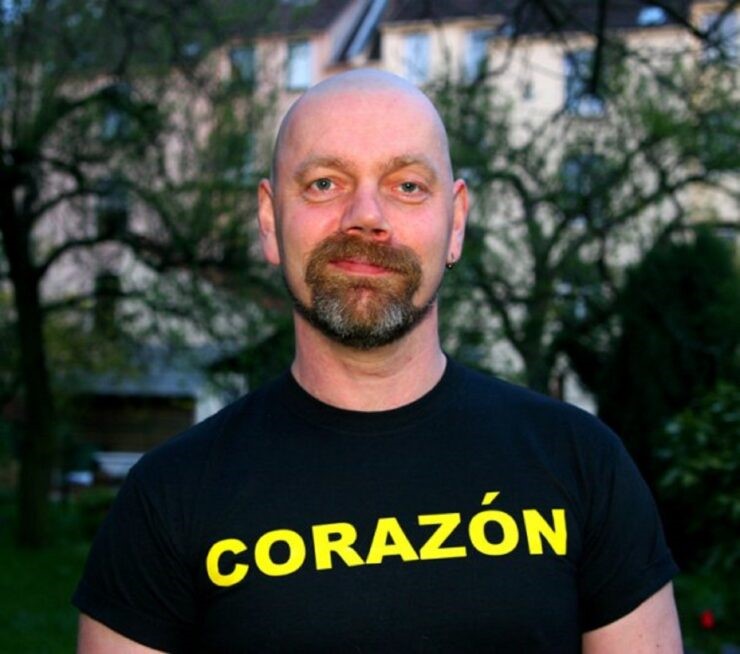
The history of the LGBT movement is a sensitive topic in general for all countries, especially since the older the documentary sources, the more fragmented they are. Some parts of this history remain lost forever. States with an older tradition of gay activism have become aware of this need and are trying to bring to life episodes from the movement's history. In the case of Germany, through art exhibitions. LGBT activist Axel Blumenthal says that "it is important to keep the history of the LGBT movement, including through art, what we do". He says the Hannover History Museum recently hosted an exhibition on "the other side of history". "We delved into the story of men who love men and women who love women", he points out.
In Germany, gay life still existed in the 1920s, before the Nazis came. Activists point out that the period was an important part of the community's legacy, as it was still known about gay/lesbian influencers in politics, music creators or researchers.
Working on the exhibition on the stories of LGBT people, Axel discovered a historical moment that he categorizes as disturbing.
"In the late 1960s, (in 1969, sexual activity between men in Germany was decriminalized) men were still not allowed to dance together in Berlin and Hamburg. So they would come to Hanover by bus, where they would go to a club or a bar. I discovered this when I was preparing the exhibition and it seems vital to me, starting from here, to document the history as well as possible", he claims.
In the Republic of Moldova, Ukraine and Germany, although at different times, the LGBT movement has taken similar steps - the transition from a predominantly cultural configuration to a political one, related to the intensification of the fight for rights.

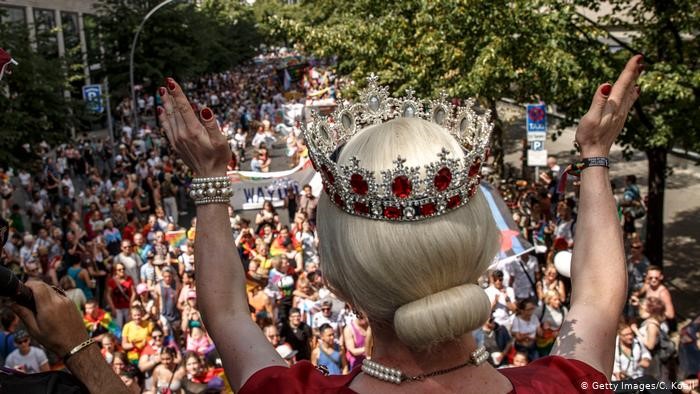
In Germany, near Berlin, Pride marches have been organized since 1980, or even earlier. Initially, they took place more "shyly", with efforts from within the community. Over time, they began to be organized at another level, with approaches aimed at equality and respect for human rights.
In 1994, Germany repealed paragraph 175, which provided for a penalty for homosexuals. But Axel says it "came as a gift that was no longer needed", because society, at that point, already understood enough about gay couples. Instead, discussions followed on the rehabilitation of people who had suffered as a result of this provision.
Axel remembers how he came out in the ‘80s when the community still had the myth that gay relationships don't last forever. "For this reason, there was no public anger provoked by us getting married", he said.
Gradually, the activists have initiated information campaigns in the street, participated in talk shows, in discussions with politicians. "In the mid-1990s, we learned to tell politicians who were coming, like, for the sixth time, just to listen to what we had to say, that they simply had to leave. Or, that it is not enough to show compassion towards our problems, that we need solutions", adds Blumenthal.
Thus, the activists reoriented themselves towards the field of justice, demanding the legalization of same-sex marriages. We appealed to the courts and worked a lot with the press. Axel remembers that they had a list of journalists that he regularly informed about meetings. At the same time, activists are participating in talks with politicians determined to do something. In 2017, in Germany, same-sex marriage was legalized. The community is currently fighting for the right to a family.
The LGBT movement has come a long way - from focusing on self-acceptance, continuing with cultural and informational appearances for the general public, to politicization, including the demand for social equality. Activists say with regret that a part of the history of the movement, for various reasons, has been lost forever. Instead, they say, it is important to value the documents kept, and the stories of those who built this movement to be known.
Aliona Ciurcă
#civilsocietycooperation: Acest material a fost produs în cadrul proiectului „Writing for Diversity” cu sprijinul Programului Parteneriatului Estic și al Ministerului Federal de Externe al Germaniei.